
Before work
Confirm possession, utilities, scope exclusions and any surfaces requiring special care.
Request room-by-room vacant-unit cleaning with exclusions, timing and final review defined for Saint Paul rental properties.
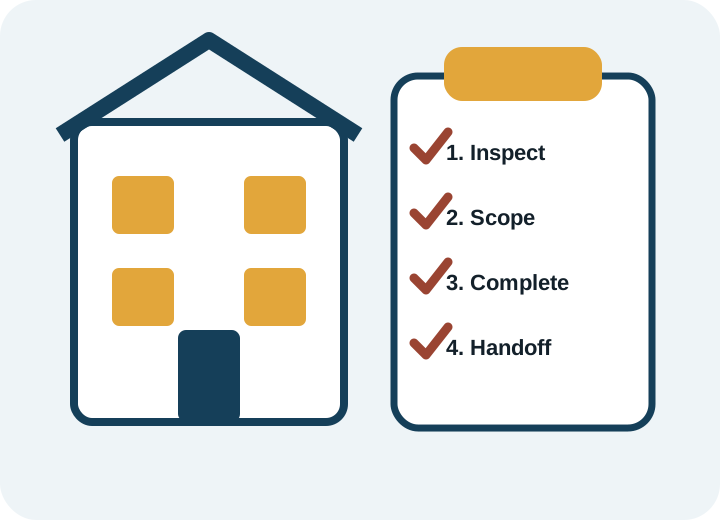
Apartment turnover cleaning is a vacant-unit service designed to prepare kitchens, bathrooms, floors, fixtures, cabinets and other agreed surfaces for final inspection and the next resident. It should begin with a written scope and end with a documented quality review rather than a vague request to “deep clean.”
Heavy buildup, pests, biohazards, construction residue and abandoned contents should be separately identified rather than assumed.
Confirm possession, utilities, scope exclusions and any surfaces requiring special care.
Flag damage that cleaning reveals so repair approvals are not delayed.
Check high-touch areas, floors, appliance interiors and room-by-room completion.
Record accepted work and any excluded condition that remains.
Saint Paul requires non-owner-occupied residential buildings to maintain a Fire Certificate of Occupancy. The City recommends owners conduct pre-inspection review before scheduled inspections.
A turnover clean is not an inspection guarantee, but a documented sanitation and condition review can help managers identify visible issues before official or internal reviews.
Saint Paul is a broad portfolio market with far more variation than one “standard turn” can describe. A vacant-unit cleaning standard may involve older duplexes, large apartment communities, affordable housing, senior properties or recurring batches spread across the city. The operating system should preserve one set of reporting rules while allowing every unit to carry its own condition, scope and deadline.
The Fire Certificate of Occupancy framework makes pre-inspection awareness a useful management practice. During a vacancy, teams can record Fire Certificate of Occupancy preparation, visible maintenance deficiencies, unit and common-area condition, alarms, egress and safety items and repair documentation and final review and route regulated or safety-related conditions to the appropriate qualified party. The turnover scope should never imply that paint, cleaning or minor repairs replace an official inspection or professional assessment.
Citywide providers also need a disciplined final quality review: property profile, unit matrix, access instructions, finish standards, change authority and closeout status. Across Saint Paul, building age and existing condition, unit count and access windows, paint, patch and repair scope, debris volume and hauling access, flooring material and lead time and portfolio reporting requirements can create major differences between superficially similar units. The site therefore asks for operational detail before anyone promises price or schedule.
The plan is written for apartment communities, affordable housing, senior housing, duplexes and multifamily portfolios throughout Saint Paul, including older-building conditions, varied access, occupied common areas, multi-unit scheduling and inspection-readiness documentation.
The scope keeps Fire Certificate of Occupancy preparation, visible maintenance deficiencies and unit and common-area condition visible while preserving the authority of official inspectors and licensed trades.
Quotes should disclose assumptions around building age and existing condition, unit count and access windows, paint, patch and repair scope and debris volume and hauling access before work is approved.
Not automatically. Trash-outs should be separately authorized and documented.
Heavy cleaning may begin early, but the final clean should follow dusty repairs, painting and flooring work.
A base checklist can be standardized, while condition-specific additions are approved separately.
Use room-by-room acceptance criteria, photos where permitted and a final walk-through or documented review.
Saint Paul requires non-owner-occupied residential buildings to maintain a Fire Certificate of Occupancy. The City recommends owners conduct pre-inspection review before scheduled inspections. The website summarizes that context for planning, but the City or other authority controls the actual requirements.
No. This website and any turnover provider are not the local inspection authority. Property management remains responsible for official requirements, permits and qualified-trade decisions.
Use the detailed form so the request can be reviewed before follow-up.